
From a young age, we were taught never to utter the words. Never to write or even think the words. Being young, we’d asked our parents and teachers why, but there were never satisfactory answers. This was the way of adults then.
It was taken for granted that we all knew the words, and of course each of us did. But how had we learned them if they were forbidden from being expressed? Were they there inside us from the beginning?
We were curious, though, and understandably so. We were kids learning about the world, both repelled by and attracted to darkness. The taboo of the words was often irresistible.
So, we mouthed the words quietly sometimes as we lay in our beds at night after lights out while our parents and siblings slept soundly in adjacent rooms. Tiny cracks would spread across our plaster ceilings sharp and fingerlike, and we’d shudder. Often, we dared each other to do this and would later inspect each other’s bedrooms for evidence of bravery or cowardice.
Sometimes, we wrote the words on sheets of loose paper and then quickly crumbled them up just as they began to smolder. This was especially common at school to disrupt semester exams or often as adolescent pranks by placing the incendiary messages in each other’s lockers.
We muttered the words under our breaths in the school hallways from time to time and wondered how much of the playground taunts, exclusion, and cruelty of our classmates we’d invoked.
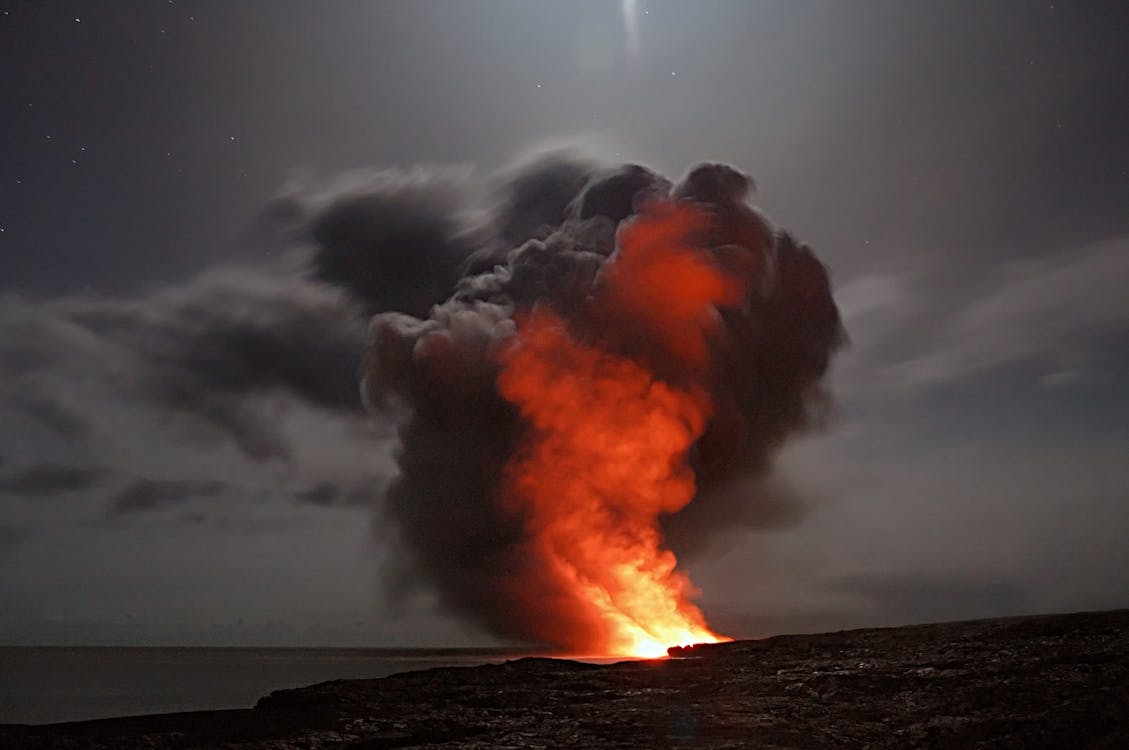
Once, we stood in a clearing deep in the woods and screamed the words at the top of our lungs and then gasped as the trees buckled and birds fell from the sky. This made us cry and we solemnly vowed never to be so reckless again.
We never spoke the words aloud, directing them at each other, but we heard stories of people who did. How they muttered the words like curses or intoned them as dark incantations. When we told these stories, we exaggerated the agony of their victims and of innocent bystanders.
We invented games and riddles to make each other think of the words without having to say them. We would see a friend’s nose start to bleed, and we’d know he or she had figured it out.
The words held a fascination for us, a mixture of horror and exhilaration that we failed to replicate once we’d grown up and outgrown the words. Nothing ever felt the same. Illicit drugs came close. Jumping from cliffs or bridges closer still.
When we were adults, some of us forgot about the words altogether or dismissed them as the silly, superstitious fantasies of children. Others passed on the same warnings to their own children continuing the cycle. A few of us even used the words defiantly but failed to see the effects on our withering faces or within our decaying bodies.
Now, we’ve grown old, and the words are ubiquitous. They’re on the lips of TV reporters and movie stars and in the melodies of pop songs ringing out from our portable electronic devices. They’re spoken without hesitation or shame. They’re written freely in novels and magazine articles and social media posts.
We tell ourselves the words have lost their destructive power, their potential for harm. We tell ourselves this even as the oceans rise up around us and the tree lines burn, as their air becomes noxious and the animals disappear from the landscape one by one.
 All Persons Fictitious